Culver's
Transforming how a beloved regional brand thinks about its menu — from a fixed quarterly document to a dynamic, data-responsive business tool.
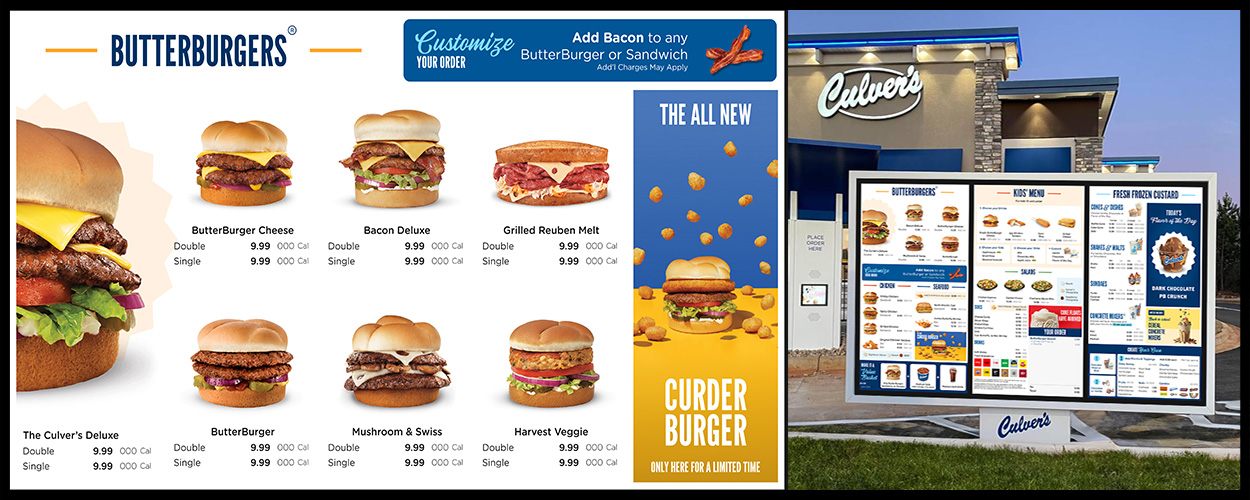
Culver's is a beloved regional QSR brand in the middle of something genuinely hard: growing beyond its Midwest roots while staying true to the loyal customer base that built it. The digital menu transformation I led wasn't just about replacing printed boards with screens — it was about shifting how Culver's thinks about their menu entirely. From a fixed, permanent statement to a dynamic, data-responsive tool that can learn and adapt as the business grows.
I led experience strategy and creative direction for Publicis Sapient on this engagement, working directly with Culver's founder and executive leadership throughout. I was responsible for overall UX direction and the modular design system. I worked in close partnership with a dedicated data and strategy team — contributing a strong voice to the data strategy and menu prioritization approach while keeping my primary ownership on the experience design side.
Culver's faces a real strategic tension in their menu experience. Loyal, returning guests value speed and familiarity — they know what they want and the menu needs to get out of their way. First-time guests, particularly in new markets outside the Midwest, need more guidance: brand storytelling, menu navigation, and a sense of what makes Culver's different. A static printed menu can't serve both audiences well.
The deeper challenge was organizational and philosophical. Culver's had been operating with static printed menus for so long that the menu had come to feel permanent — a fixed representation of the brand rather than a dynamic tool for driving business outcomes. Changing that mindset was as much a part of the work as the design itself.
One of the most important conversations I had on this engagement was about data — specifically, getting Culver's leadership to actually look at what was selling and what wasn't. The menu gave equal visual real estate to items regardless of performance. A dive into sales data revealed things that seemed obvious in retrospect but hadn't been acted on: certain items held prime board position despite a fraction of the sales volume. Soups and chili had significant real estate even in midsummer — a legacy of printed boards that couldn't be updated seasonally.
"The boards are not permanent. They should be treated as a dynamic area to gain data and act on it responsively."
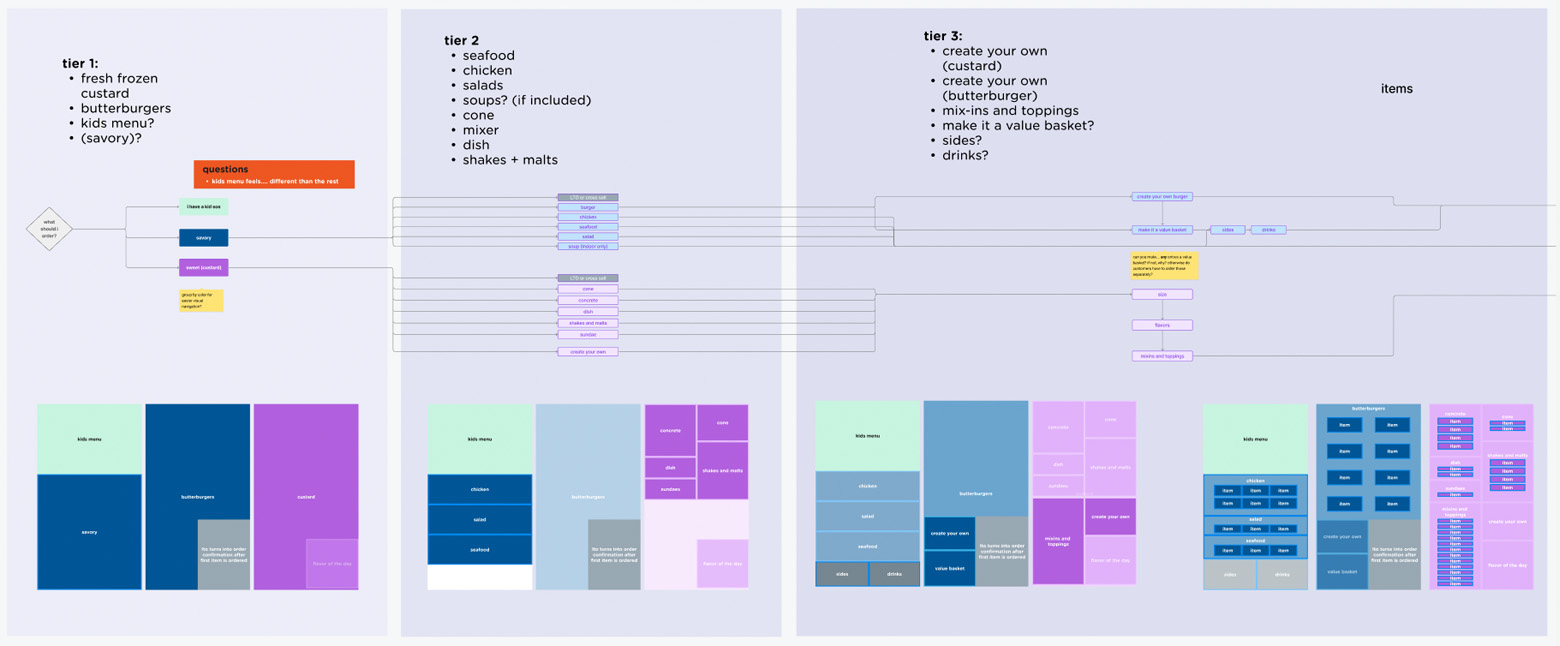
I led development of a modular system built with future CMS architecture in mind — flexible enough to support the content agility Culver's would need as the platform matured, while maintaining the brand consistency their loyal customers expect.