Sears Holdings
Owning the bottom of the funnel — and turning conversion optimization into measurable revenue impact at enterprise scale.
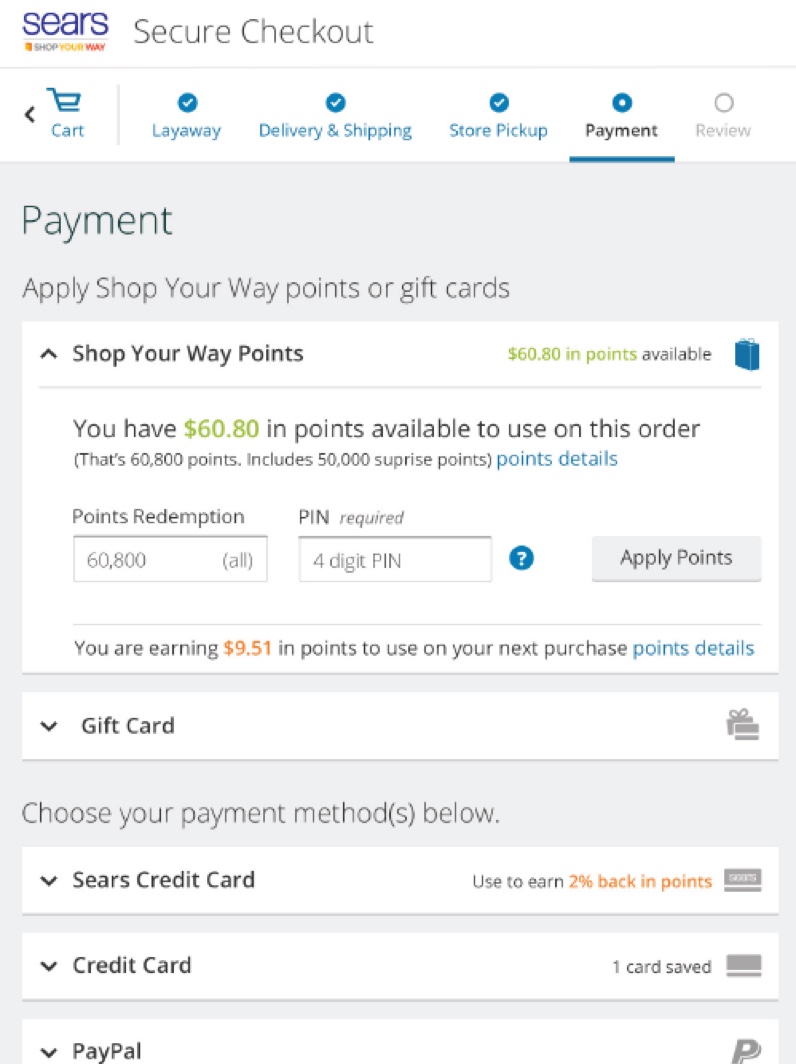
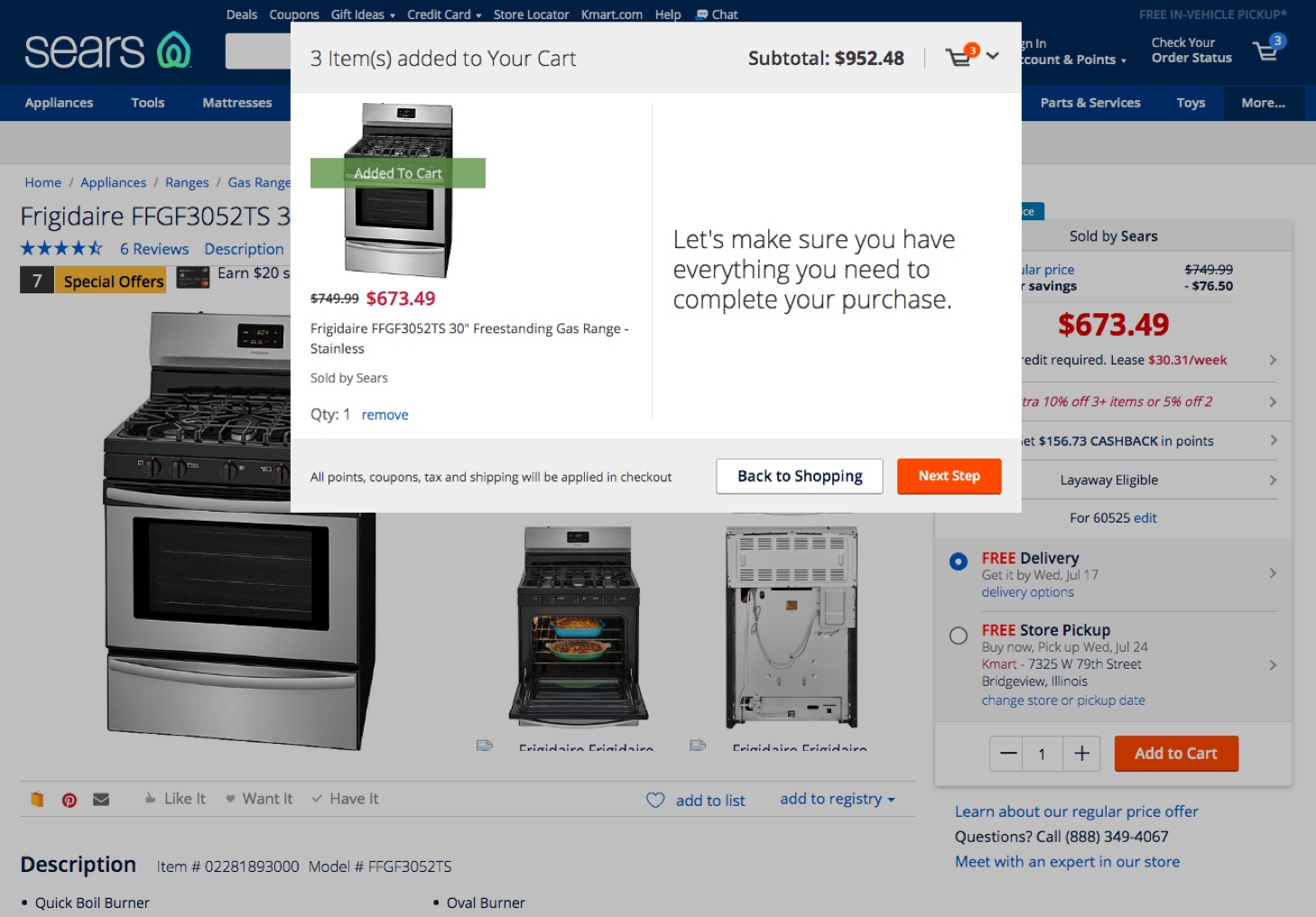
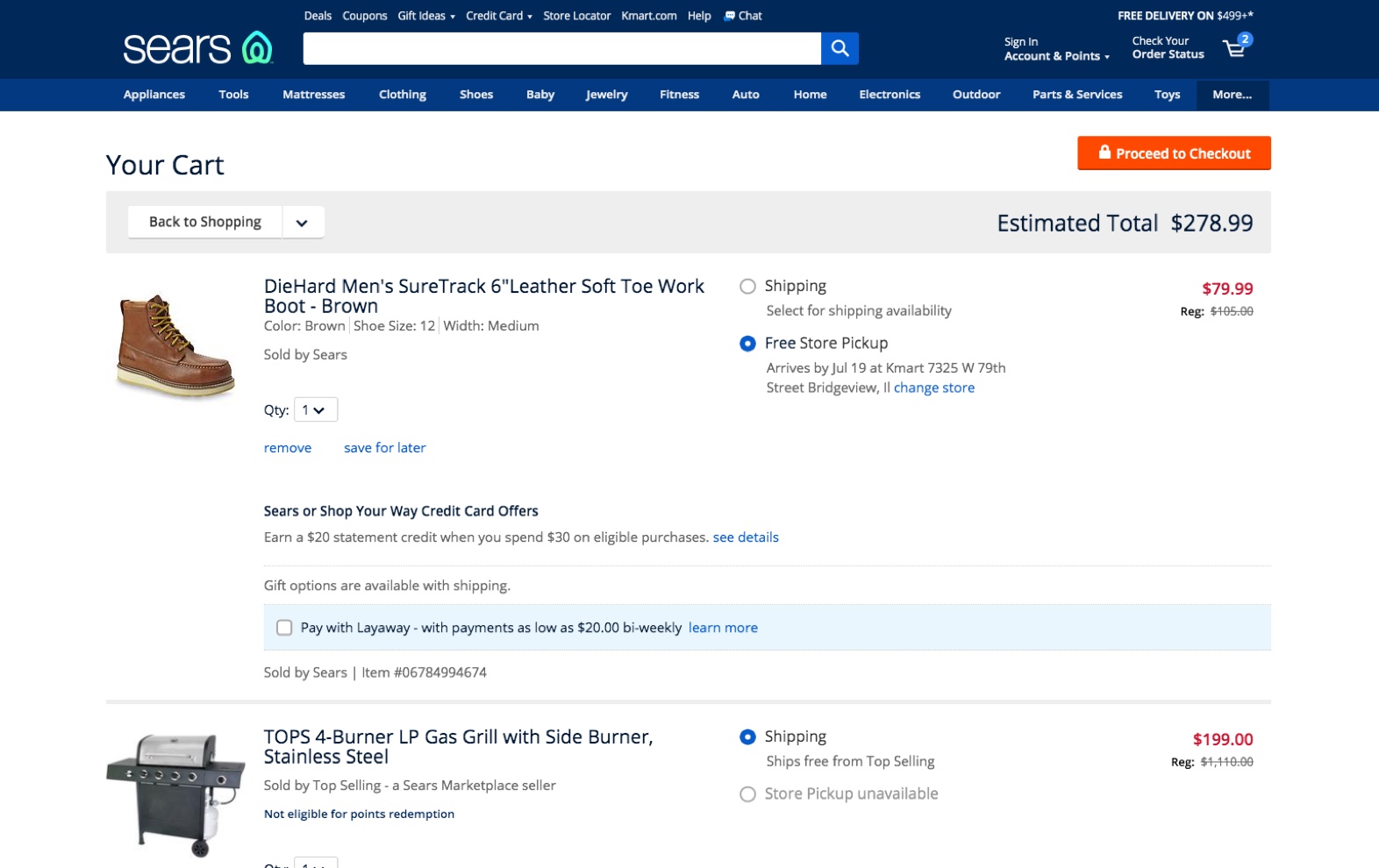
As UX Manager for Bottom of Funnel at Sears Holdings, I owned the most commercially critical part of the digital experience: cart, checkout, and every step between add-to-cart and completed purchase. This was a high-velocity, high-stakes environment — where design decisions were measured in direct revenue impact and every friction point had a dollar value attached to it.
I led a team of senior and junior UX designers responsible for all bottom-of-funnel experiences across desktop, tablet, and mobile. My responsibilities spanned mentorship, work critique, project estimates, resource allocation, and direct partnership with business stakeholders on roadmapping and long-term UX strategy. I also led a full platform migration of the checkout systems to WCS.
Bottom-of-funnel work at enterprise scale is a constant negotiation between business complexity and user simplicity. Sears operated across multiple brands and fulfillment models, which created layers of checkout logic that needed to feel invisible to customers. At the same time, the competitive pressure from Amazon and other pure-play ecommerce players meant the bar for checkout experience was rising faster than legacy retail organizations could typically move.
The additional challenge was pace. 200+ features and updates in a single year while maintaining quality, testing rigorously, and keeping conversion improving requires both strong design judgment and strong people leadership.
I focused the team on two things: ruthless prioritization and a test-and-learn culture. Not every idea deserved a full build — we got disciplined about what to validate quickly and what to invest in deeply. That discipline let us ship at volume without sacrificing quality on the things that mattered most.
The tablet conversion work was a particular area of focus — mobile commerce was accelerating and tablet was an underserved surface with distinct interaction patterns. We designed specifically for that context rather than simply adapting desktop flows, which drove meaningful conversion lift.